A New Approach to Asset Ownership
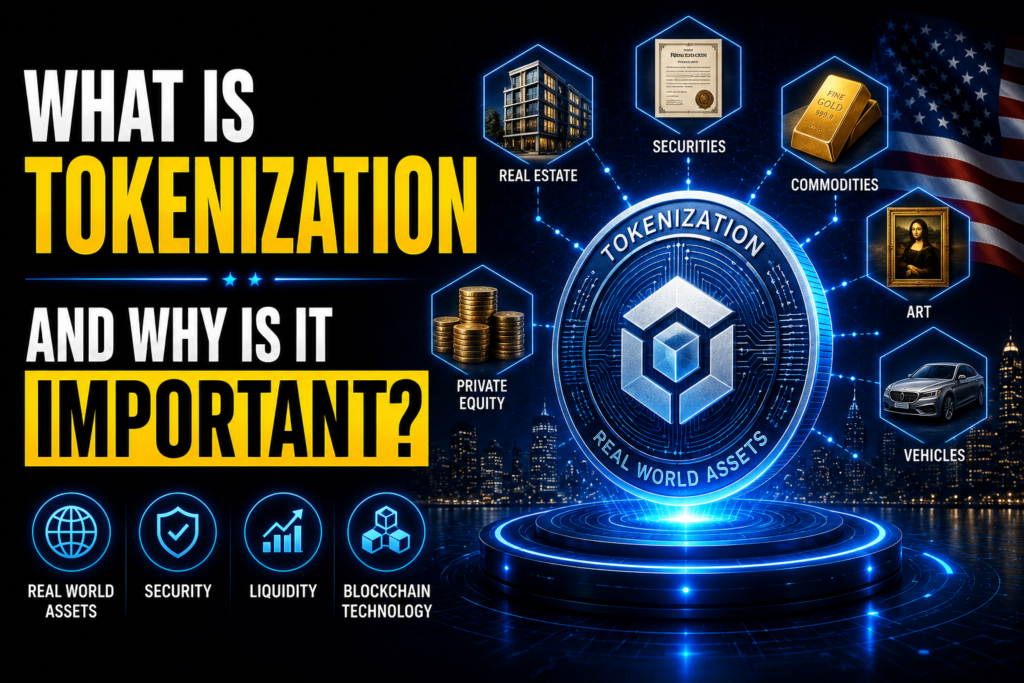
Tokenization is one of the most promising developments emerging from blockchain technology. The concept involves converting ownership rights of an asset into digital tokens that exist on a blockchain. These tokens can represent a wide range of assets, including real estate, artwork, financial instruments, and other forms of value.
As blockchain adoption continues to grow, tokenization is attracting attention from investors, businesses, and financial institutions seeking more efficient ways to manage ownership and transactions.
The ability to represent real-world assets digitally has the potential to transform multiple industries.
How Tokenization Works
When an asset is tokenized, digital tokens are created to represent ownership interests in that asset. These tokens can be stored, transferred, and managed using blockchain technology.
Blockchain records provide transparency and traceability, allowing participants to verify ownership information more easily. This digital approach can streamline administrative processes while improving efficiency.
Tokenization does not change the underlying asset itself. Instead, it creates a digital representation that can simplify transactions and record keeping.
Potential Benefits of Tokenization
One advantage of tokenization is increased accessibility. In some cases, assets can be divided into smaller ownership units, making participation more accessible to a broader range of investors.
Tokenization may also improve liquidity by enabling more efficient trading and transfer of ownership rights. Traditional asset transactions often involve complex procedures that can be time-consuming and costly.
Blockchain-based systems offer opportunities to simplify these processes while maintaining transparency.
The Future of Tokenized Assets
Financial institutions and technology companies continue exploring tokenization as a way to modernize asset management. While adoption remains in its early stages, many experts believe tokenization could become an important component of future financial infrastructure.
As regulatory frameworks develop and technology improves, tokenized assets may become increasingly common across various industries.
Conclusion
Asset tokenization represents an innovative approach to ownership and value transfer. By combining traditional assets with blockchain technology, tokenization has the potential to improve accessibility, transparency, and efficiency. As adoption grows, it may play a significant role in shaping the future of finance and investment.