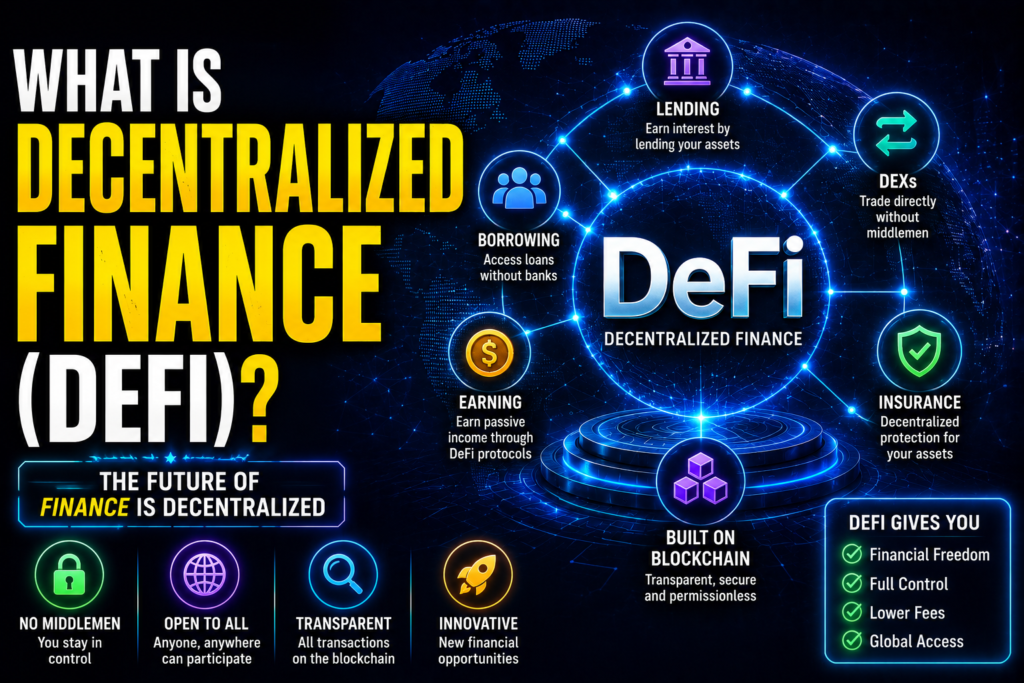
The Rise of Decentralized Finance
Decentralized finance, commonly known as DeFi, is one of the most transformative developments in the cryptocurrency industry. DeFi refers to a collection of blockchain-based financial services that operate without relying entirely on traditional intermediaries such as banks or financial institutions.
The concept gained popularity as developers began building applications that allowed users to borrow, lend, trade, and manage assets directly through blockchain networks. By removing certain intermediaries, DeFi aims to create a more open and accessible financial system.
As blockchain technology continues to evolve, decentralized finance is attracting attention from investors, developers, and businesses across the United States.
How DeFi Works
DeFi applications are typically powered by smart contracts, which are self-executing programs that automatically carry out predefined actions when specific conditions are met. These smart contracts enable financial services to operate without requiring direct oversight from centralized organizations.
Users can interact with DeFi platforms through digital wallets, allowing them to access financial services directly from blockchain networks. Transactions are recorded transparently on public ledgers, providing visibility into network activity.
This approach has introduced new possibilities for financial innovation while expanding access to services that may not be available through traditional systems.
Opportunities Created by DeFi
One of the main attractions of decentralized finance is accessibility. Individuals can participate in financial activities without needing approval from a centralized authority. This has encouraged experimentation and innovation within the blockchain industry.
DeFi has also introduced new methods for transferring value, managing assets, and creating financial products. Developers continue launching applications that explore different approaches to lending, borrowing, and asset management.
The rapid pace of innovation has helped establish DeFi as one of the most active sectors within the cryptocurrency ecosystem.
Challenges Facing Decentralized Finance
Despite its potential, DeFi faces several challenges. Smart contract vulnerabilities, regulatory uncertainty, and user education remain important considerations. Because DeFi applications often involve complex technologies, users must understand how these systems work before participating.
Security is particularly important because blockchain transactions are generally irreversible. Investors should research platforms carefully and follow best practices when managing digital assets.
As the industry matures, many experts expect improvements in security, usability, and regulatory clarity.
Conclusion
Decentralized finance represents a significant shift in how financial services can be delivered and accessed. By leveraging blockchain technology and smart contracts, DeFi has introduced innovative alternatives to traditional financial systems. While challenges remain, decentralized finance continues to be one of the most exciting areas of development within the cryptocurrency industry.