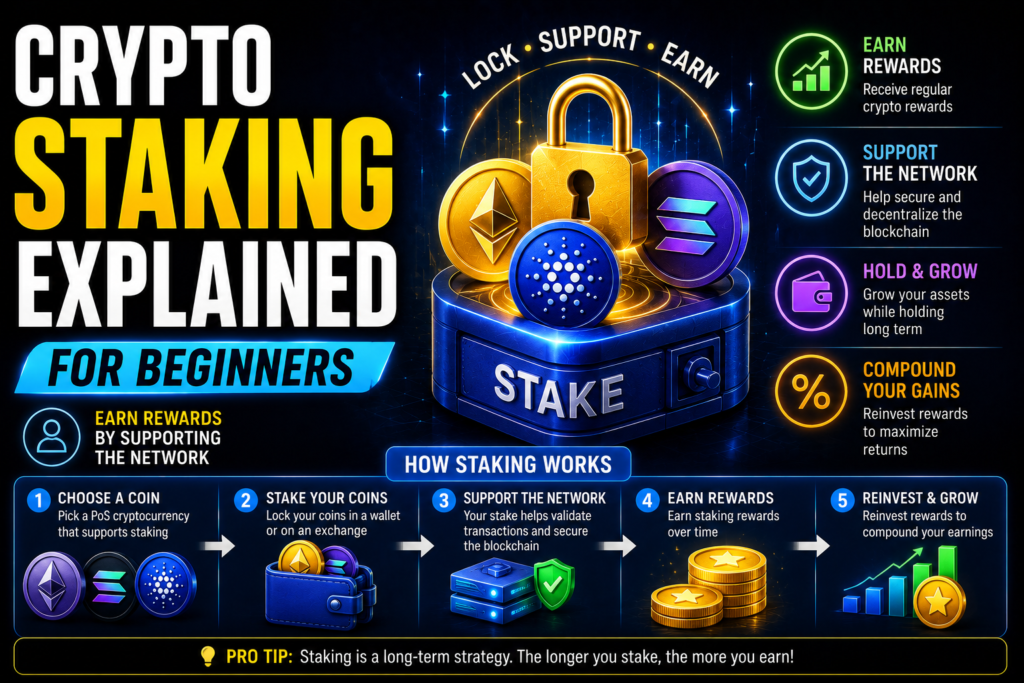
Crypto staking has become one of the most popular ways for cryptocurrency holders to participate in blockchain networks while potentially earning rewards. As blockchain technology evolves, staking offers an alternative to traditional mining by helping secure networks and validate transactions.
What Is Crypto Staking?
For beginners, staking can seem complex at first. However, the basic concept is relatively straightforward. Users commit a portion of their cryptocurrency holdings to support the operation of a blockchain network. In return, they may receive rewards based on the amount they stake and the rules of the network.
Staking has gained popularity because it allows investors to actively participate in blockchain ecosystems without requiring specialized mining equipment.
How Staking Supports Blockchain Networks
Many modern blockchain networks use a consensus mechanism known as Proof of Stake. This system relies on participants who lock up their cryptocurrency to help validate transactions and maintain network security.
When users stake their assets, they contribute to the overall stability and functionality of the blockchain. Validators are selected to process transactions and create new blocks, helping ensure the network operates efficiently.
Because participants have a financial stake in the system, Proof of Stake is designed to encourage honest behavior and discourage malicious activity.
Why Investors Are Interested in Staking
One reason staking has attracted attention is the opportunity to earn rewards while holding cryptocurrency. Instead of leaving assets inactive, investors can potentially generate additional returns through participation in staking programs.
For long-term holders, staking may provide a way to engage with blockchain networks while supporting their growth and development. Many investors view staking as an additional utility beyond simple asset ownership.
However, rewards can vary depending on network conditions, staking requirements, and the amount of cryptocurrency involved.
Risks Associated With Staking
Although staking offers potential benefits, investors should understand the associated risks. Cryptocurrency prices can fluctuate significantly, meaning the value of staked assets may change over time.
Some staking arrangements also involve lock-up periods during which assets cannot be easily accessed or sold. This can limit flexibility during periods of market volatility.
Investors should carefully research any staking opportunity and understand how rewards, security measures, and withdrawal policies work before participating.
The Future of Staking
As blockchain adoption expands, staking is expected to remain an important component of many cryptocurrency networks. Developers continue improving staking systems to enhance security, scalability, and user experience.
The growing popularity of Proof of Stake networks suggests that staking may become increasingly accessible to both retail and institutional participants. As educational resources improve, more investors are likely to explore staking as part of their broader cryptocurrency strategies.
Conclusion
Crypto staking provides a way for investors to support blockchain networks while potentially earning rewards. Although it is not without risk, staking has become an important feature of the modern cryptocurrency ecosystem. Understanding how staking works can help beginners make informed decisions and participate more confidently in the world of digital assets.